

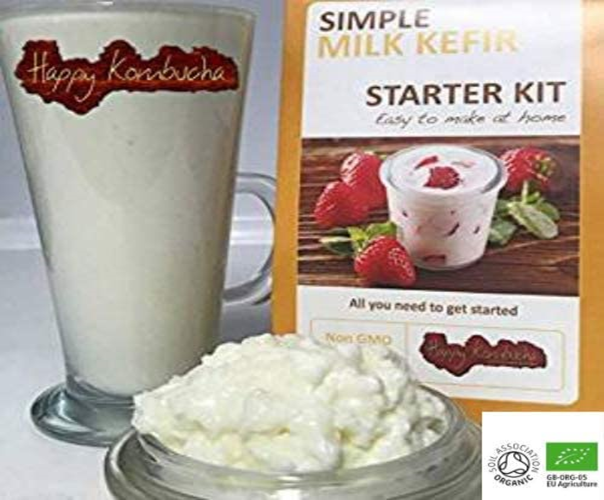
Kefir grains, a colony of symbiotic bacteria and yeast, are used to make milk kefir (SCOBY). It is often used as a probiotic beverage, but it also goes well in smoothies and may be used in place of buttermilk. Even like yoghurt, it can get thicker.
SO WHY MAKE MILK KEFIR?
Kefir prepared at home and kefir purchased from a store are two different things. Typically, the kefir you buy at the store is basically a combination of bacterial cultures that make yoghurt that you can drink. Kefir cannot be stored on shelves in grocery shops because it is produced by a symbiotic colony of yeast and bacteria.
Milk kefir, however, is the ideal dairy culture for usage at home.
Compared to yoghurt, it is simpler to manufacture. You don’t have to heat the milk prior to culture because it ferments at room temperature.
Buttermilk may be easily substituted with milk kefir while baking.
Whipping cream may be cultivated using kefir grains to make cultured butter and ice cream.
Making soft cheese with it is possible.
For almost everything, kefir may be used as a starting culture (either as whey or pure kefir).
Probiotics can best survive digestion when consumed with cultured dairy. And milk kefir offers such potent health advantages.
Selecting and caring for the proper grains
If you want to start brewing your own culture, Happy Kombucha provides a fantastic range of unique kefirs. When you are starting off, their essay on how to start brewing covers every aspect. They include fine cultured kefir grains in their sachets; these grains are the source of the culture. Your batch of kefir grains is brewed using these.
WHAT TO DO WITH KEFIR GRAINS
Fresh milk that has reached room temperature is ideal for kefir. In order to keep your kefir out of the refrigerator for at least three days a week, try to pace your culture. Simply cultivate 2 cups of kefir at a time with 1 Tbsp of grains if you only need a tiny bit of it.
Your grains don’t need to be washed. To maintain them wholesome and robust, they only require fresh milk. Given that your water is undoubtedly chlorinated, water is both useless and maybe hazardous.
You may store your kefir grains in double the suggested amount of milk in the refrigerator for up to 4 weeks if you need to take a break from growing.
How to Execute?
Kefir grains from Happy Kombuchas are packaged in sachets. Cut the packet open when your order arrives and pour the contents into 250ml of milk. For brewing, they advise using organic milk. Antibiotics in nonorganic milk will eradicate the germs. Use any milk you choose, including nut milk and milk from goats or cows.
FERMENTATION JAR
You will require a vessel to ferment your milk kefir in. We advise using glass. Glass is significantly simpler to maintain sterility and keep clean. Plastic is prone to scratches and deterioration over time, both of which can serve as breeding grounds for germs. The chemicals included in plastic, such as bpa, provide a danger of chemical contamination. The ideal container is a jam jar in the glass kilner form.
WHERE SHOULD I FIND MILK?
The greatest kefir may be made with organic dairy milk. Milk from cows and goats works best. Kefir made from full milk will be rich and creamy. Kefir can still be made from semi-skimmed and skimmed milk, but it has a considerably thinner consistency. Try out various milks to see which one you like most. Kefir can also be made with raw milk. Before preparing kefir from raw milk, we advise you to learn more about the hazards associated with using it. Here is additional information about using raw milk. Rice or coconut milk, for example, are non-dairy milk substitutes that some individuals have found to be somewhat successful, but milk kefir grains do not perform well in these liquids (see below on using coconut milk). Try water kefir grains as a dairy-free substitute if you have issues with dairy.
